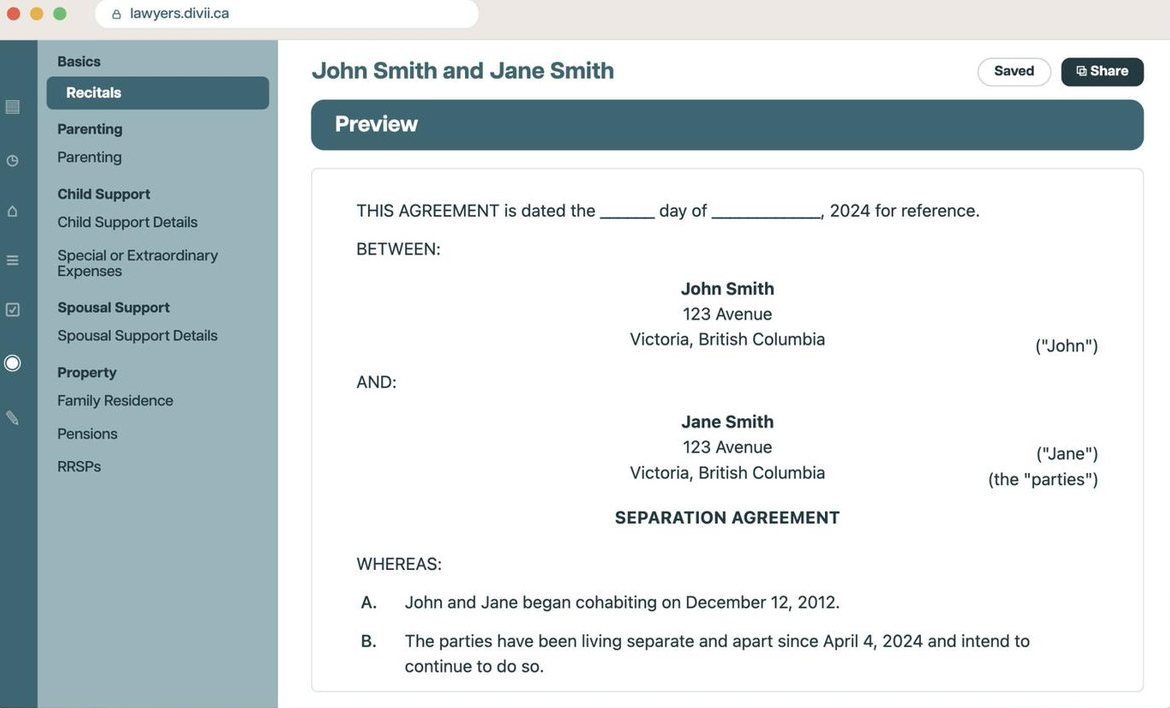
A separation agreement is a legally binding contract between separating spouses that records your decisions about parenting, child support, spousal support, and the division of property and debts.
In BC, a properly prepared separation agreement is often the only legal document a separating couple needs. Most couples never go to court. This page explains what a separation agreement covers, what makes it enforceable under BC law, what it costs, and the three ways to get one with Victoria Mediation.
A separation agreement is a written contract made under BC's Family Law Act between two people whose relationship has ended. It applies to married spouses and to common-law partners (in BC, generally couples who lived together for at least two years). It sets out, in one document, how you will handle:
Once signed with the proper formalities, a separation agreement is binding and enforceable. It can be filed with the court and enforced like a court order, and BC courts will generally uphold agreements that were made fairly, with full financial disclosure.

Working through the details together at the mediation table.
No, but you almost always want one first.
Divorce is the court order that legally ends a marriage. A separation agreement is the contract that resolves everything else: parenting, support, and property. For most couples, the separation agreement is where the real work happens, and the divorce itself becomes simple paperwork afterward. If you have children, a court will not grant a divorce unless reasonable arrangements have been made for their support, which your separation agreement establishes.
Common-law couples do not divorce at all. For them, the separation agreement is the complete legal resolution.
Read more: separation agreement vs. divorce, what is the difference?
Yes, when it is done properly.
For a separation agreement to hold up in British Columbia, it should be:
Independent legal advice for each spouse before signing is not strictly mandatory, but it significantly strengthens the agreement and is the professional standard. Every agreement we prepare is signed after both spouses have had the opportunity to obtain independent legal advice.
You can, and for very simple situations (short relationship, no children, no property) a template may be adequate. For most families, templates are where future legal fees are born. The common failures we see: agreements that ignore excluded property rules, waive spousal support without the analysis a court expects, set child support incorrectly, or use vague parenting language that guarantees conflict later. An agreement that gets set aside or fought over costs far more than doing it correctly the first time.
The option most people do not know exists: Divii, the family law platform Rebecca built, walks you through every decision a BC separation agreement requires, runs the actual support and property calculations, and drafts the agreement as you go, at a fraction of the traditional cost, with professional support available whenever you need it.
Work through everything online at your own pace. Add Divii Mediated only if points remain unresolved.
Explore Divii ›Pre-mediation with Rebecca, then your Divii file together, then two hours of targeted mediation with your full Separation Agreement drafted by Rebecca. Divii purchased separately.
See Divii Mediated ›For complex finances or higher conflict, with legal experience in the room throughout.
Meet Rebecca ›For comparison, and not our pricing: this is what two lawyers negotiating a separation commonly costs, per person, depending on conflict and complexity. Every option above costs a fraction of that because you do the substantive work together and share the process.
Every path ends the same way: a Separation Agreement drafted or reviewed by a senior family lawyer, with independent legal advice encouraged before signing. See full pricing
Mediation begins with private, one-on-one meetings. Each of you shares your concerns, your priorities, and your perspective in confidence, so the process can be structured around what actually matters to your family.
Before any decisions are made, you gather the relevant information and learn how BC family law applies to your situation. Clarity about what you have and what your options are comes first. The plan comes after.
In joint sessions you work through parenting, support, and property in order, with schedules, calculations, and scenarios on screen as you talk. Seeing the same objective picture makes good decisions easier to reach.
Your decisions become a Separation Agreement drafted or reviewed by a senior family lawyer, written in clear, neutral language, with independent legal advice encouraged before you sign. Legally binding, and built to last.
Through mediation with us, most couples complete the process in four to six weeks from the first pre-mediation meeting to a signed agreement. Self-guided timelines in Divii are up to you; some couples finish in days.
One lawyer cannot represent both spouses. What we do instead: a neutral lawyer-mediator helps you both reach decisions and drafts the agreement, and each of you then gets your own independent legal advice before signing. You get legal expertise throughout without paying for two opposing lawyers.
Notarization is not required. The agreement must be in writing, signed by both spouses, and each signature must be witnessed. Filing the agreement with the court is optional but allows support terms to be enforced like a court order.
Yes, by written amendment when you both agree. Parenting and support terms can also be varied when circumstances change significantly. Good agreements include a process for reviews, which is something we build in.
Mediation requires two willing participants, but willingness often follows information. A free consultation can help you understand your options, and many reluctant spouses engage once they see the process is neutral, structured, and far cheaper than lawyers. If mediation truly is not possible, we can tell you that honestly and point you to the right kind of help.
Yes, arguably more than married couples. After two years of living together, common-law partners in BC generally have the same property division rights and support obligations as married spouses, but there is no divorce process to force resolution. The separation agreement is the legal resolution.
More questions about agreements, cost and timing are answered in the mediation FAQs.

Not sure which path fits your situation? Take the two-minute quiz, or book a free consultation and we will walk through it with you.
Book a Free ConsultationTake the Quiz Already decided? Book your pre-mediation meeting